
This feature is available only with paid Kochava accounts. Contact us to learn more.
Audience Query provides the ability to create audiences for activation or engagement from row-level data. These custom audience and engagement queries can be saved for future use or modification.
Audience Query User Interface
- Log in to Kochava.
- Select the desired Account.
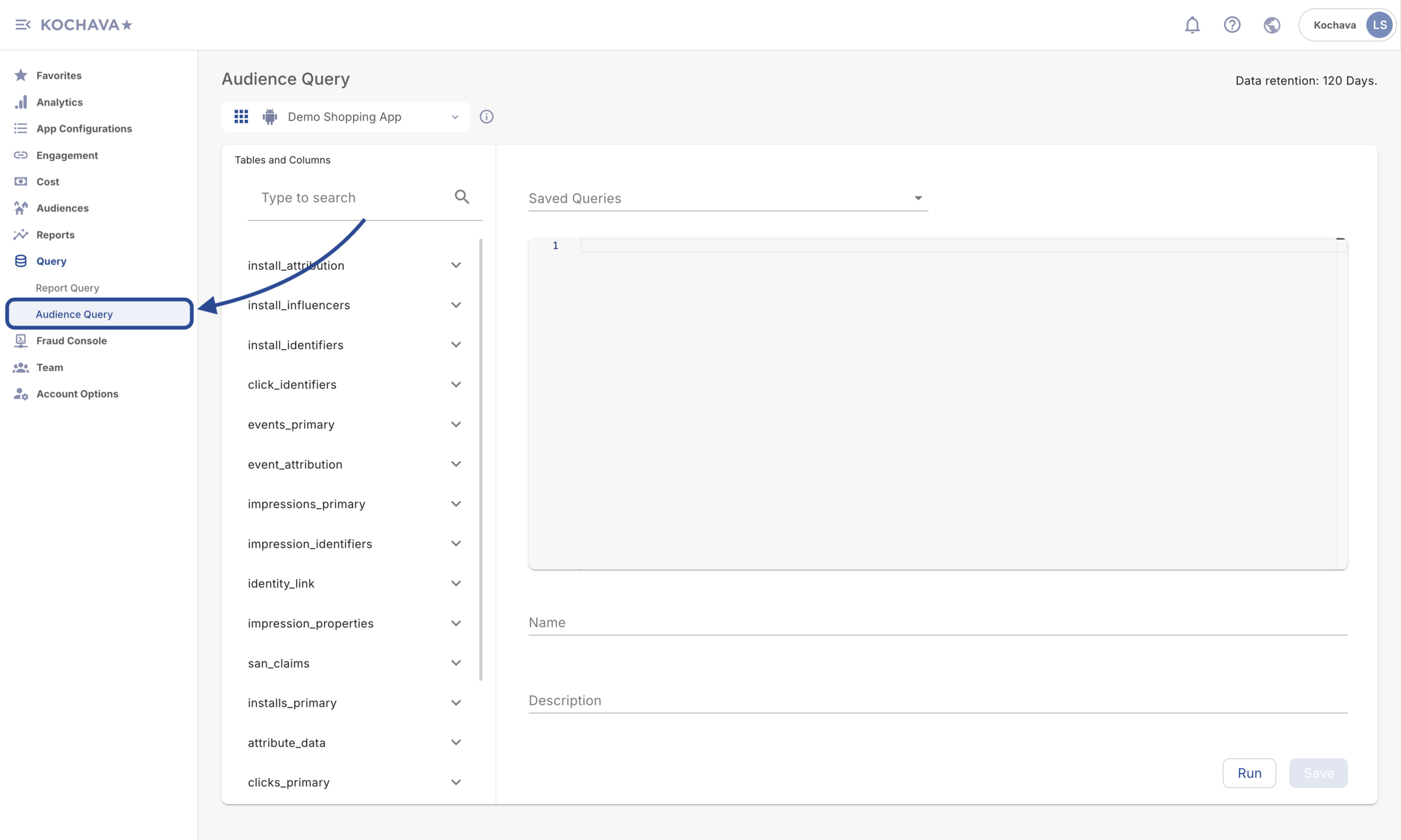
- Select Query > Audience Query.
Query Overview
Audience Query provides drop-down menus to select saved audience queries, an area allowing the creation of custom queries, a text box displaying the query code, as well as the options to run and save the custom audience queries. Once an audience query has been run, the first 100 rows of results will be displayed below the tool. Additional results can be viewed by Clicking Load More.
The number of days for which data is available is displayed in the upper-right corner. Query retention is determined based on the service level purchased.
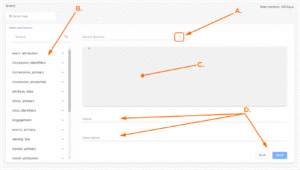
A. Saved Audience drop-down menu.
B. Custom Query Tables and Columns Selection options
C. All code within the Query Code box can be edited.
D. Run and Save Audience options.
Meta AMM (Facebook & Instagram) Network Breakdown
Advertisers who have signed Meta’s mobile app measurement data terms can include Facebook and Instagram attribution data directly in Query results, shown as their own distinct networks.
Enabling Meta AMM data in a query
- On the Audience Query page, locate the Meta AMM toggle.
- Read the performance banner above the toggle — turning it on may increase how long your query takes to run, since it reads from an additional, restricted data table.
- Turn the toggle ON to include Facebook and Instagram data in your query results.
Who can use this toggle
- The Meta AMM toggle is not available to agency users — This is a requirement of Kochava’s data partnership terms with Meta, not an account permission that can be changed.
How Meta data appears in results
When the toggle is on, Facebook and Instagram each appear as their own distinct network in query results — they are not grouped together under “Restricted.”
If Meta data terms are later revoked
If an advertiser’s Meta data terms are revoked, the toggle remains available, but data collected going forward will no longer be eligible for inclusion. Historical data collected while terms were active remains accessible in query results.
Creating a Custom Audience Query
Custom Audience Queries may be created for any of the apps that are associated with the current account and any of the tables of data that have been collected.
- Construct query within window.
- You can click on Tables to see the associated columns.
- You can click on a column and that column name will populate within the query window.
- Click Run to execute the current query.
- Add an Audience Name (and Description, if desired).
- Click Save.
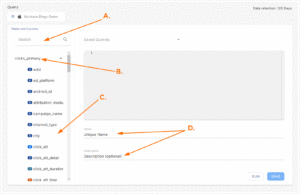
A. Saved Audience drop-down menu.
B. Custom Query Tables and Columns Selection options
C. All code within the Query Code box can be edited and the background changed.
D. Run and Save Audience options.