1. Home
  2. Marketers
  3. Campaign Management
  4. Create a Petal Ads Campaign
  1. Home
  2. Marketers
  3. Create a Petal Ads Campaign

Create a Petal Ads Campaign


The following document defines the process for creating a Petal Ads campaign within Kochava. This setup allows Kochava to send installs to Petal Ads to allow for attribution.

Data Needed Before Beginning Process:

  • Petal Ads Link ID
  • Petal Ads Conversion Type

Create a Petal Ads Campaign

  1. Log in to Kochava.
  2. Select the desired Account and App.
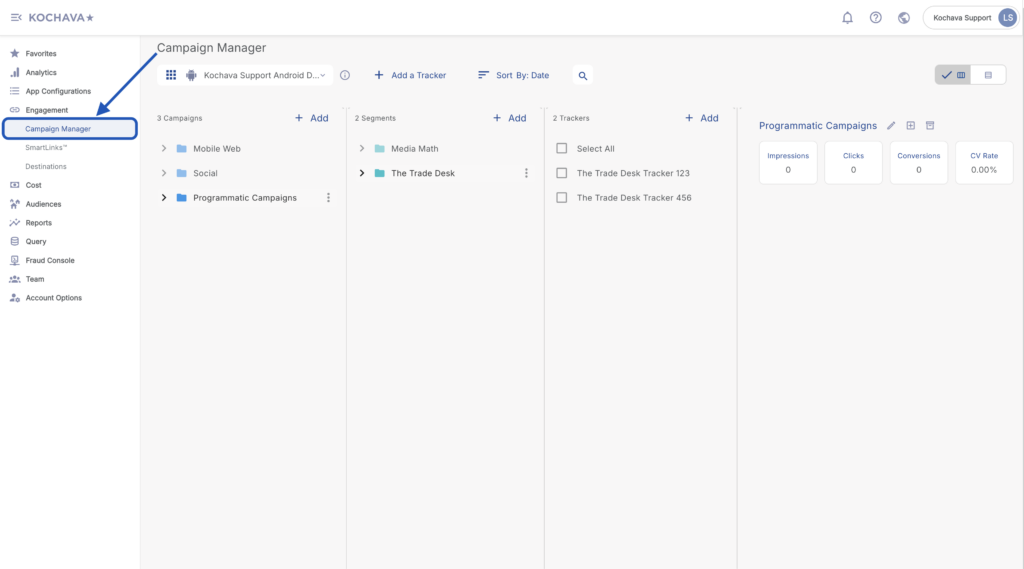
  3. Select Engagement > Campaign Manager.

Feature Note: To add this menu item to your Favorites Menu, select the “+” sign that appears when you hover over the menu. The Features Menu provides quick access to your most frequently visited areas of the Kochava UI.

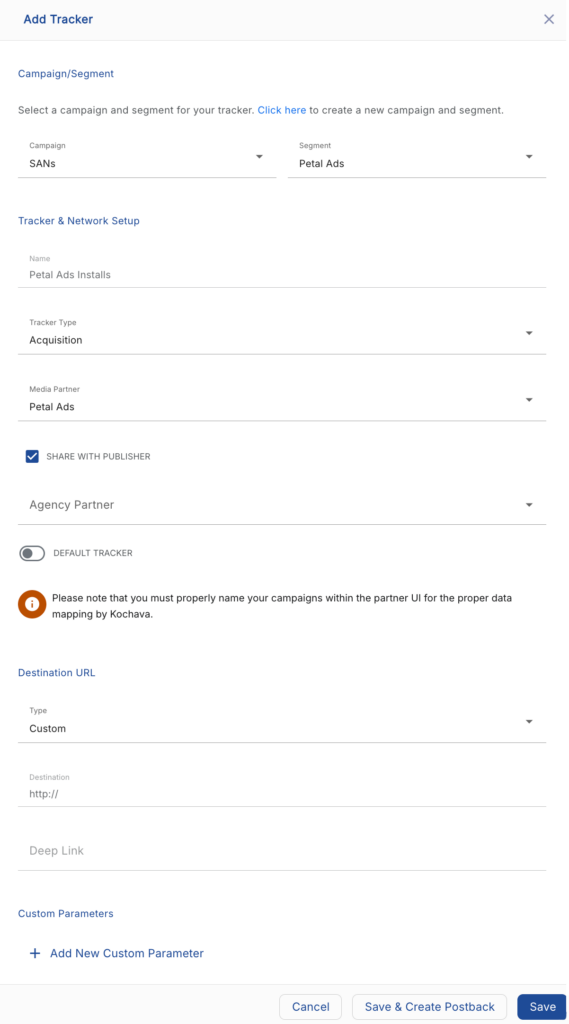
  1. Select the desired Campaign & Segment, or create new ones.
  2. Click + Add (Tracker)

NOTE: In order to streamline the Campaign/Segment/Tracker creation process a feature has been added to allow the creation of campaigns and segments while creating a new tracker. For more information about creating a campaign or segment while adding a new tracker, refer to our Create an Install Campaign support document.

  1. Enter a unique Tracker Name.

NOTE: When a Tracker is created, Kochava automatically generates a name for the Tracker. We recommend that you replace the Tracker name at this point with a clear name of your choosing.

  1. Select Tracker Type > Acquisition. (default setting)
  2. Select Select a Network > Petal Ads.
  3. Select Default Tracker:
    1. On
    2. Off (default)

NOTE: Selecting On will allow SAN network traffic to funnel to the default tracker when no tracker ID is present. If a default tracker is not set up and the tracker ID is not appended to the partner campaign name, that data will be bucketed in the most recently set up tracker for that network.

  1. Select the Destination URL Type:
    1. Custom
    2. Google Referrer (Android Only)
  2. Enter the Install Destination URL.
  3. Enter a Deep Link. (optional)

NOTE: For more information about deep links, refer to our Deep Linking support documentation.

  1. Add a Custom Parameter. (optional)
    1. Click Add New Parameter.
    2. Enter the Custom Parameter.
    3. Add additional Custom Parameters. (optional)

NOTE: At the Campaign Level, advertisers can utilize the Custom Parameter fields to track any custom aspect of their campaigns that they define. You can use cp_0 through cp_9 and they will be populated within their own columns in reporting. For assistance with Custom Parameters, contact your Client Success Managers.

NOTE: When a custom parameter is created, it is inserted automatically into the Click URL.

NOTE: In order to remove a custom parameter, Click the “X” associated with the specific parameter.

  1. Click Save. (If no further trackers need to be created).
  2. Click Save & Add Another Tracker. (If additional trackers need to be created).
  3. Click Save & Create Postback. (To navigate directly to the Partner Configuration page).

NOTE: Google Referrer is set as the default destination type for Android apps. For the majority of Android install campaigns, Google Referrer is used for optimal conversion tracking. Google Referrer will only appear for Android based apps. If the Google Referrer Install URL needs to be updated, refer to our Update Google Referrer Install URL support documentation.


Create a Petal Ads Postback Configuration

  1. Select App Configurations > Partner Configuration.
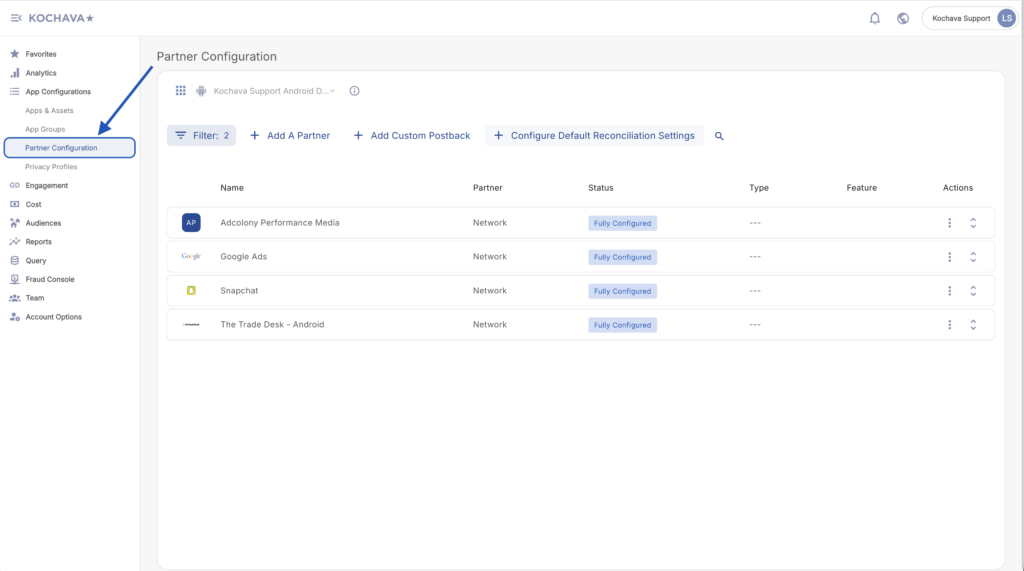
Feature Note: To add this menu item to your Favorites Menu, select the “+” sign that appears when you hover over the menu. The Features Menu provides quick access to your most frequently visited areas of the Kochava UI.

  1. Click + Add a Partner.
  2. Select Network Partner > Petal Ads.
  3. Click Next.
  4. Verify Status: Active.
  5. Click Save.
  6. Expand Petal Ads Partner Configuration.
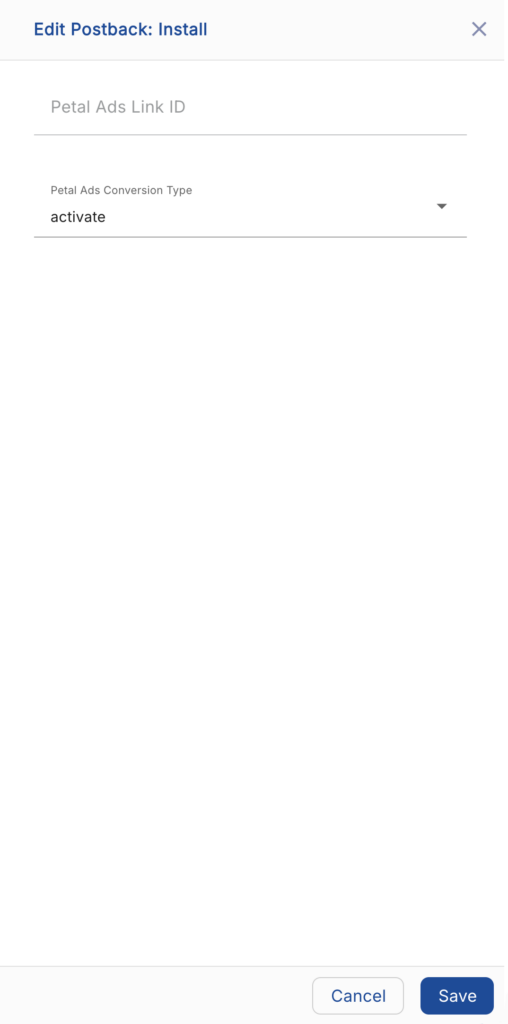
  7. Click Install > (Edit).
  8. Enter the Petal Ads Link ID.
  9. Select the Petal Ads Conversion Type.
Conversion Types:
  • activate
  • browse
  • collection
  • addToCart
  • preOrder
  • register
  • retain
  • paid
  • levelAchieved
  • addPaymentInfo
  • addToWishlist
  • completeRegistration
  • tutorialCompletion
  • initiatedCheckout
  • purchase
  • subscribe
  • startTrial
  • rate
  • search
  • spentCredits
  • achievementUnlocked
  • contentView
  • listView
  • adClick
  • adView
  • travelBooking
  • share
  • invite
  • login
  • reEngage
  • openedFromPushNotification
  • update
  • custom
  1. Click Save.

Reengagement Configuration

The information within this section provides the steps necessary to establish a reengagement campaign. If a reengagement campaign does not need to be created, the information in this section may be disregarded.

NOTE: Petal Ads requires a reengagement tracker and postback for Kochava to send data for any post-install event.

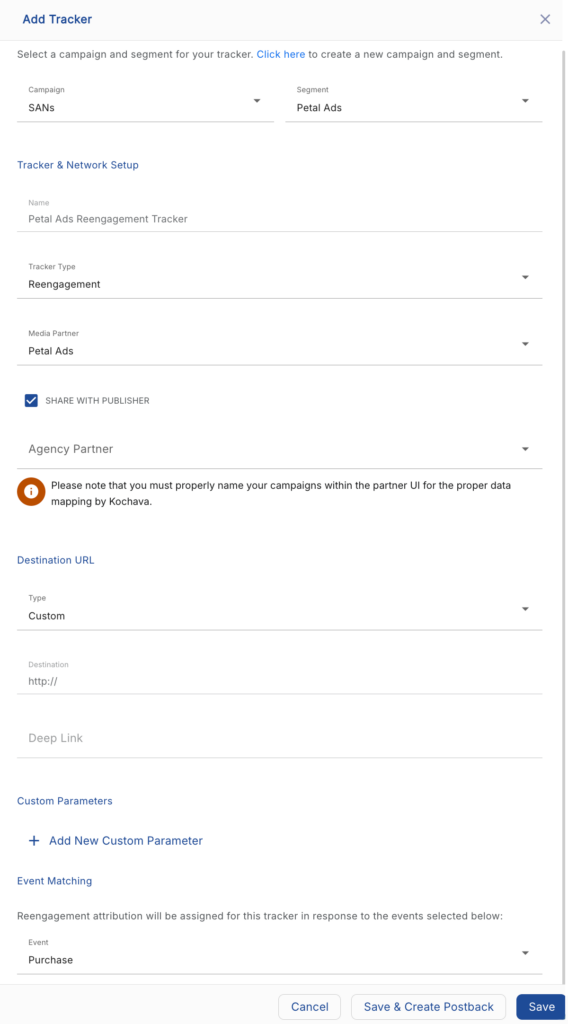
Create a Reengagement Tracker:

  1. Navigate to Engagement > Campaign Manager.
  2. Select the desired Campaign & Segment, or create new ones.
  3. Click + Add (Tracker).
  4. Enter a Tracker Name.
  5. Select Tracker Type > Reengagement.
  6. Select Media Partner > Petal Ads.
  7. Select an Agency Partner. (optional)
  8. Add Reengagement Event.

BEST PRACTICES: While multiple events can be added to the reengagement tracker it is highly recommended that only 1 event be added for each reengagement tracker.

NOTE: A Reengagement event can be added by clicking on the “+” and removed by clicking “X“.

  1. Click Save (If no further trackers need to be created).
  2. Click Save & Add Another Tracker (If additional events need to be created).
  3. Click Save & Create Postback (to navigate directly to the Partner Configuration page).
Post-install Event Postback Configuration:

  1. Select App Configurations > Partner Configuration.

Feature Note: To add this menu item to your Favorites Menu, select the “+” sign that appears when you hover over the menu. The Features Menu provides quick access to your most frequently visited areas of the Kochava UI.

  1. Expand the Petal Ads Partner Configuration.
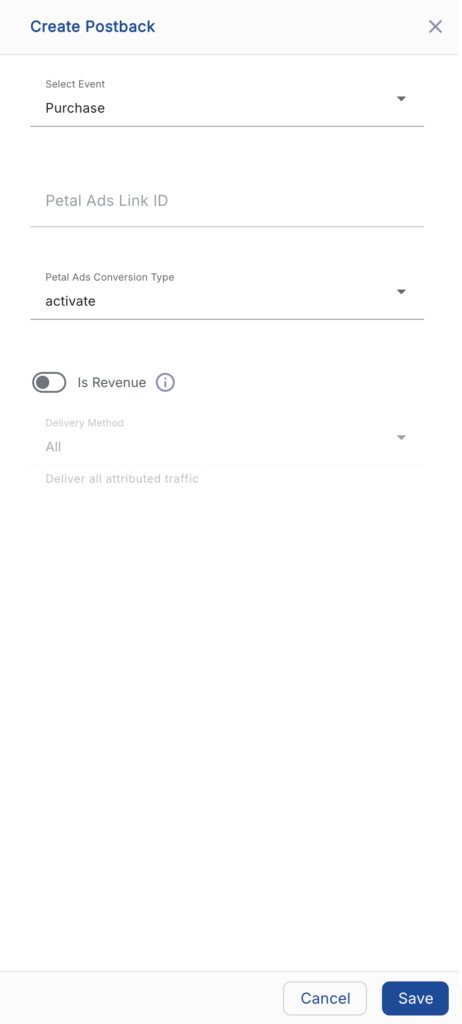
  2. Select + Add a Postback.
  3. Select the desired Event.
  4. Enter the Petal Ads Link ID.
  5. Select the Petal Ads Conversion Type.
  6. Check Is Revenue if the option includes revenue data.
  7. Select the Delivery Method. (optional)
  8. Click Save.
Updated on April 22, 2026

Was this article helpful?